Eliminating lost customer responses with Reply Matching
A brittle exact-match system was leaving 30% of customer replies unread, and how it was fixed.
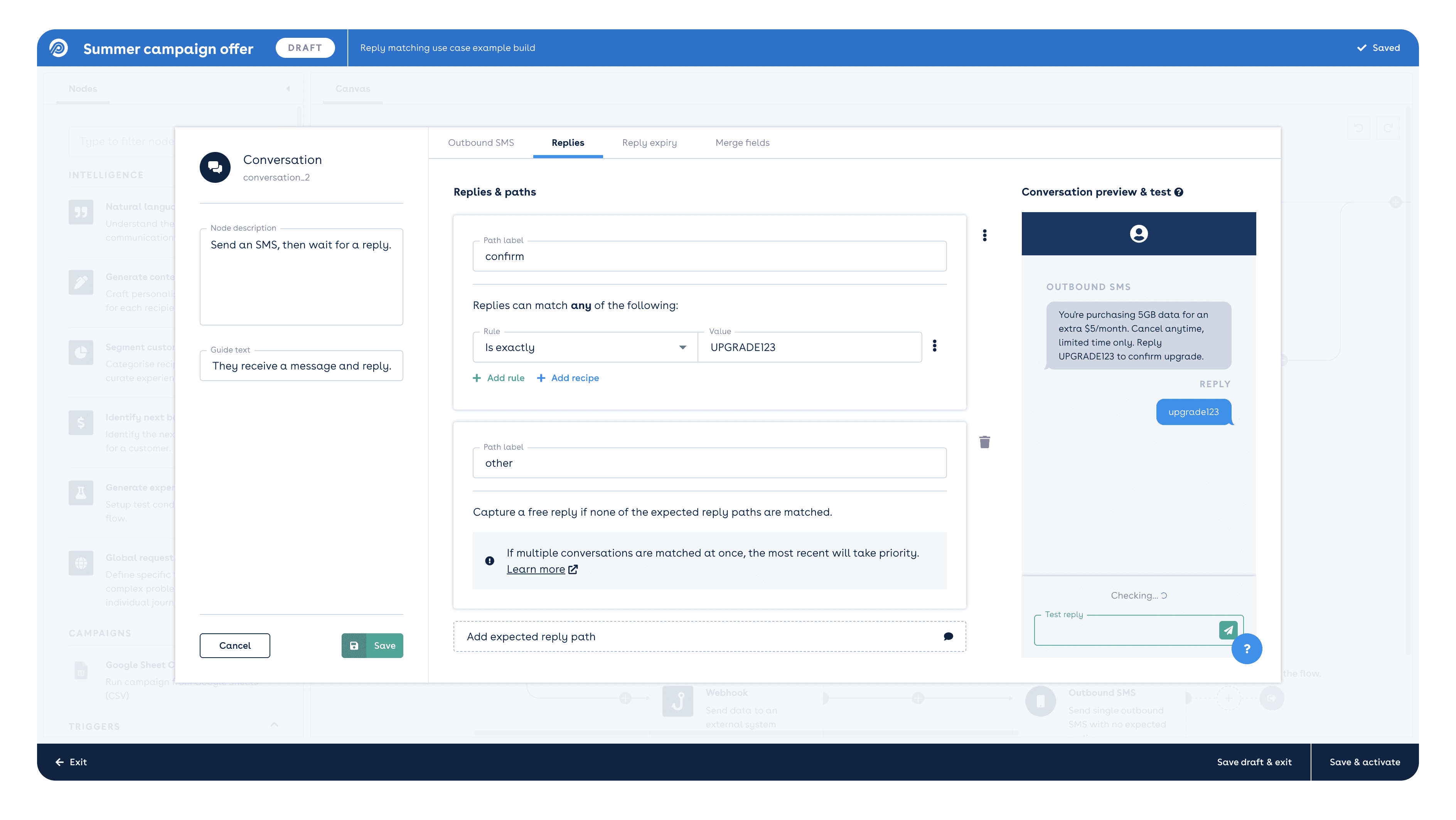
Pendula is a B2B SaaS customer engagement platform powered by AI. Non-technical marketers can build AI-driven, two-way conversations. The AI layer handles segmentation, behavioural triggers, and escalation decisions — think a telco sending 100,000 bill reminders via SMS, then intelligently handling every reply.
The problem
Automated conversations were started with customers, but Pendula only recognised replies that matched exactly. 30% of customer responses were falling through the cracks: ‘Sure’ instead of ‘YES’, unsolicited feedback, natural variations no one had anticipated. I designed a reply matching system that captured all of them, with enough flexibility to unlock use cases the team hadn't planned for.
The results
Every customer reply captured and new use cases unlocked
78%
feature adoption. Exact-match replies are still needed for contractually binding offers
100%
replies tracked, with new use case unlocks (surveys, upsell and cross-sell).
2%
reduction in churn rates for a leading telco customer.
My role
Team
Lead product designer (me!)
1 product manager (me!)
4 engineers
1 engineering manager
Tools
Figma, LucidChart,
Maze, Notion
skills
Product design
User research & testing
Product marketing
Design architecture
reflection
This project stretched me — I was both lead designer and product manager, which meant the brief didn't exist yet when I started. Prototype testing showed the original direction wasn't right: a simple regex builder still required too much effort for common use cases. Research confirmed it — interviews, CS support logs, and product analytics all pointing at the same gap. I changed course and pushed for pre-written rules instead, running the concept against every collected use case before bringing it to product, sales, or the C-suite. Getting an unplanned feature into scope meant bringing everyone along. Testing also flagged that "pre-written regex" meant nothing to non-technical marketers, so we renamed to "recipes" — something I only landed on from watching people try to use it. I coordinated the launch across Sales, Customer Success, Engineering, and Product, and wrote the product marketing materials and documentation myself.
discover: research
How do real life customers actually reply?
I ran user interviews to understand what was actually breaking — what scenarios were causing replies to disappear, and what users needed to do when they did. Affinity mapping across sessions surfaced three consistent patterns:
30% of recipients reply outside of prescribed instructions
Customers reply with feedback or variations of the instructions ("For sure", "yep", "Y") that the exact-match system couldn't handleUsers need to define intents to measure metrics and reply with confidence
Users manually addressed each unexpected reply ("Y" instead of "YES") that came in.Customers provide unsolicited, insightful feedback
Valuable NPS insights have been lost as it isn't captured in a system of record.
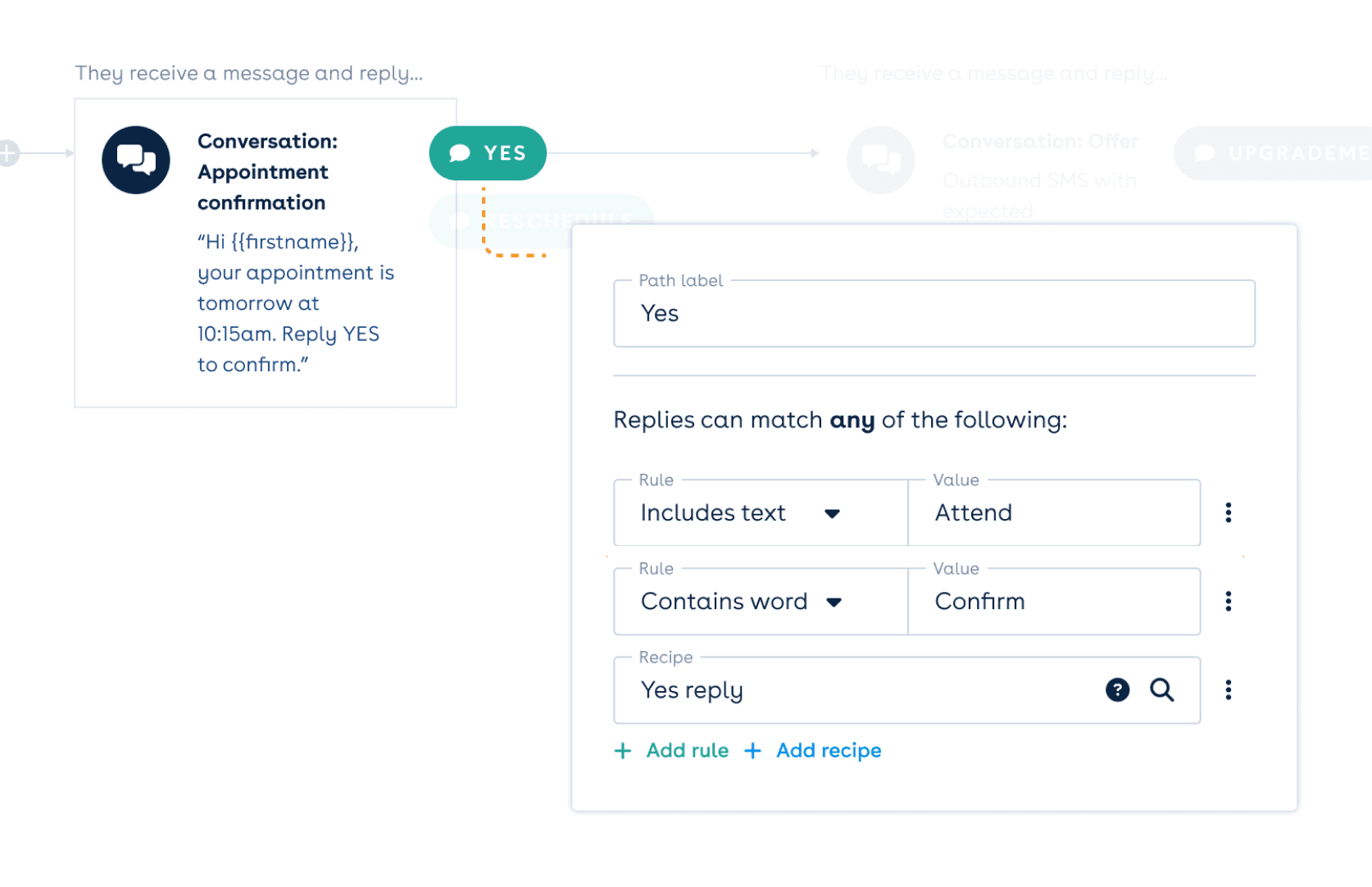
Running user interviews revealed 'I'm coming' can be expressed differently according to its context.
develop & define
Iterating, and iterating again
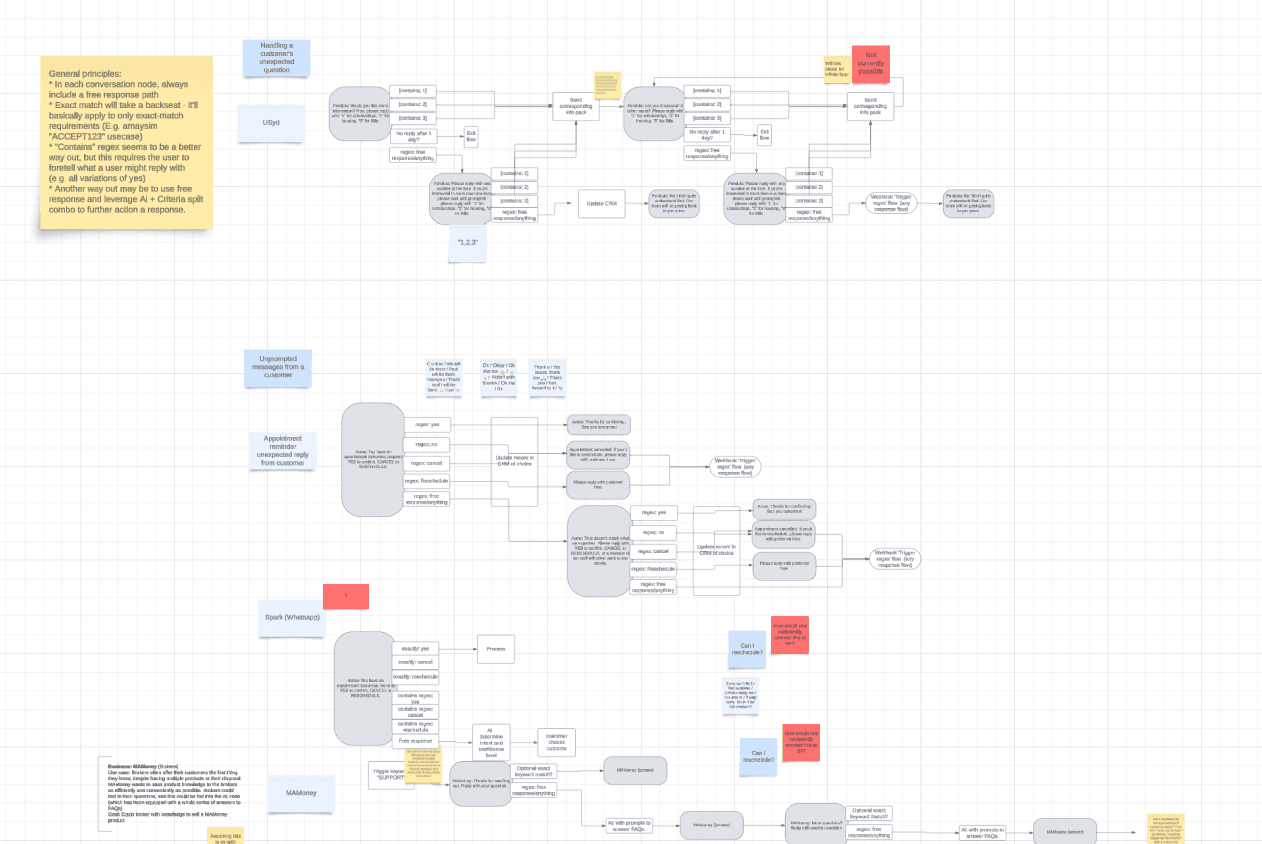
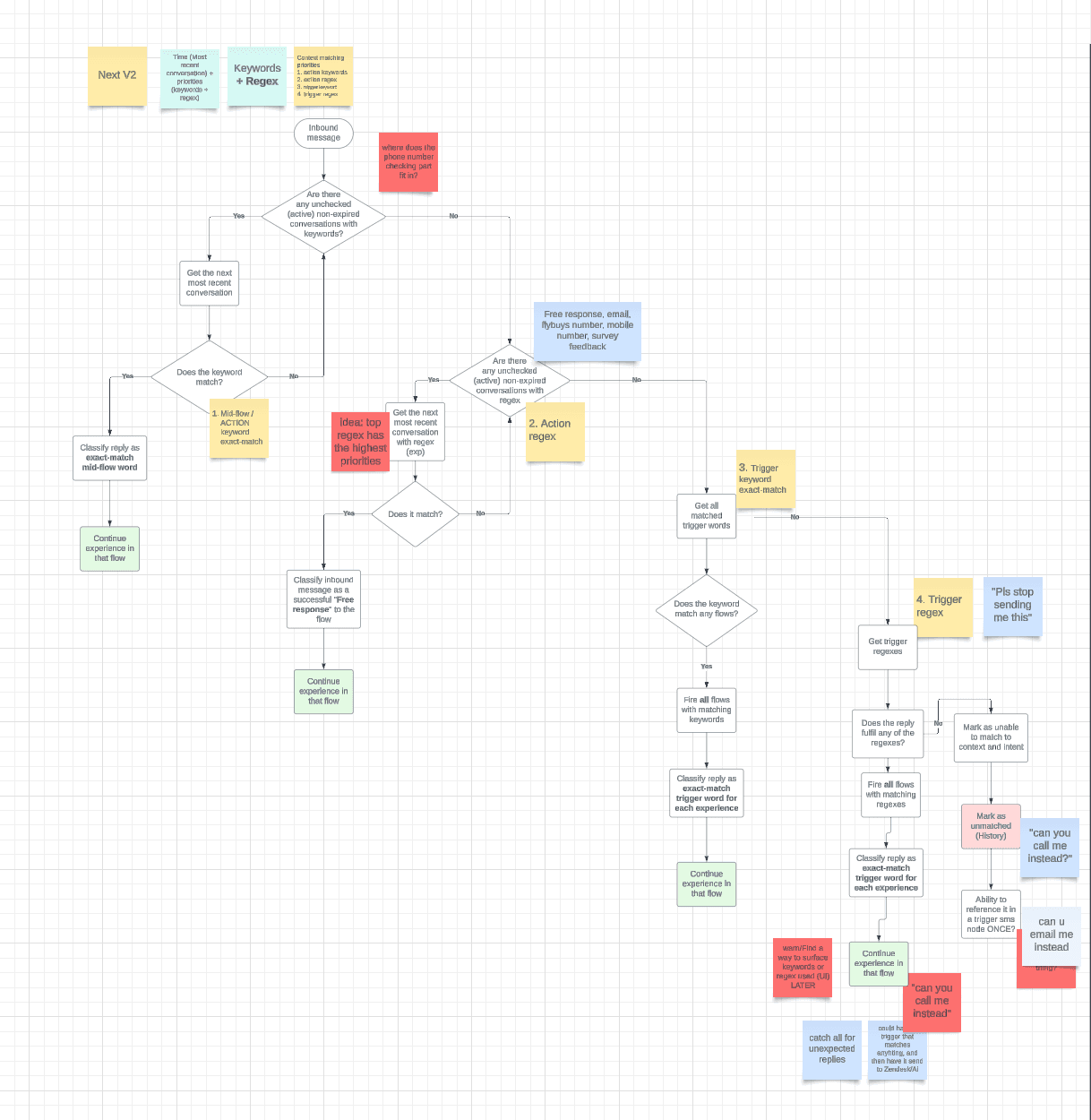
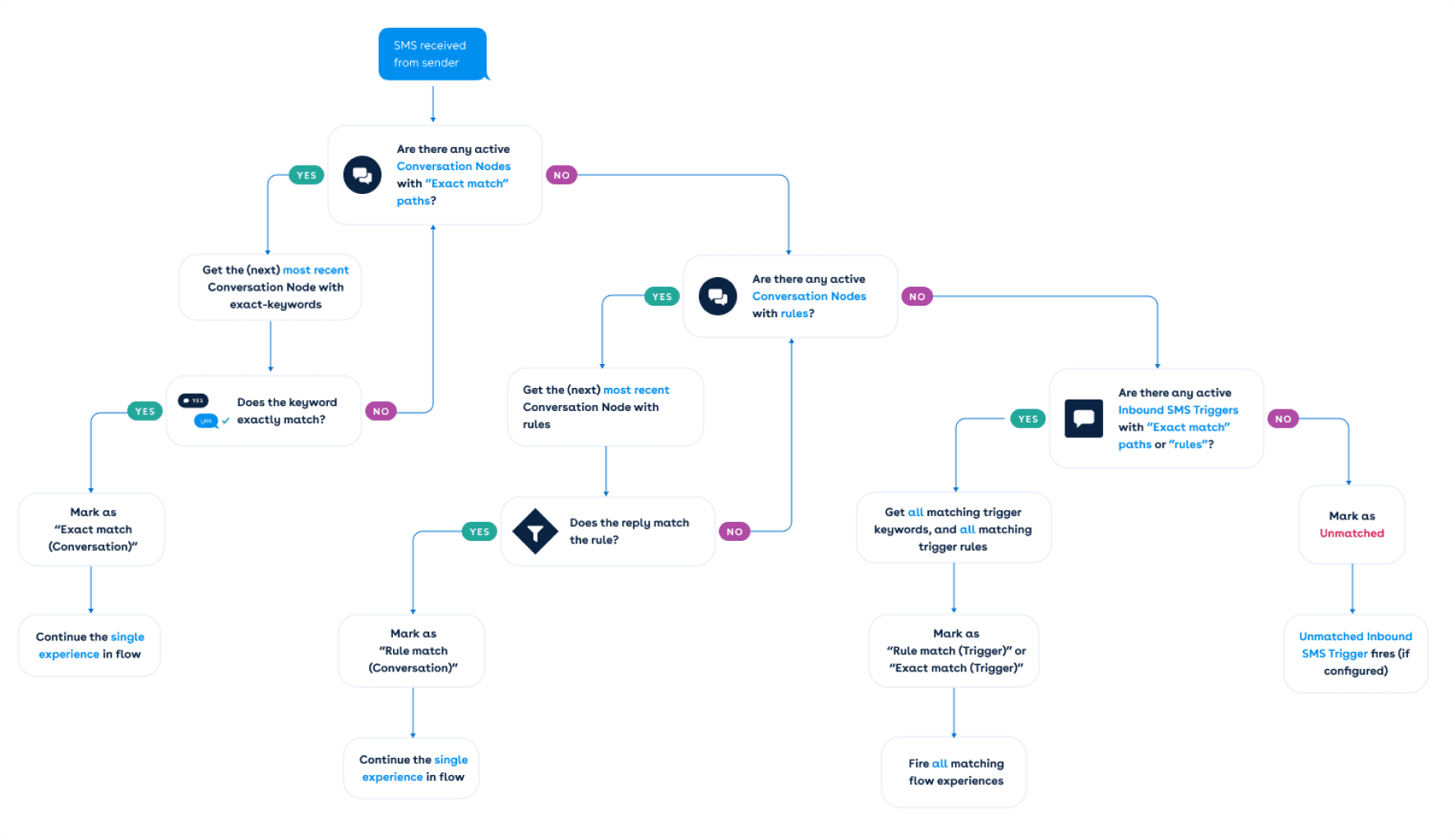
I worked closely with engineering and customer success to gather real-world edge cases. Their feedback shaped how we surfaced confidence levels, how users could override incorrect matches, and how the system handled ambiguous replies.
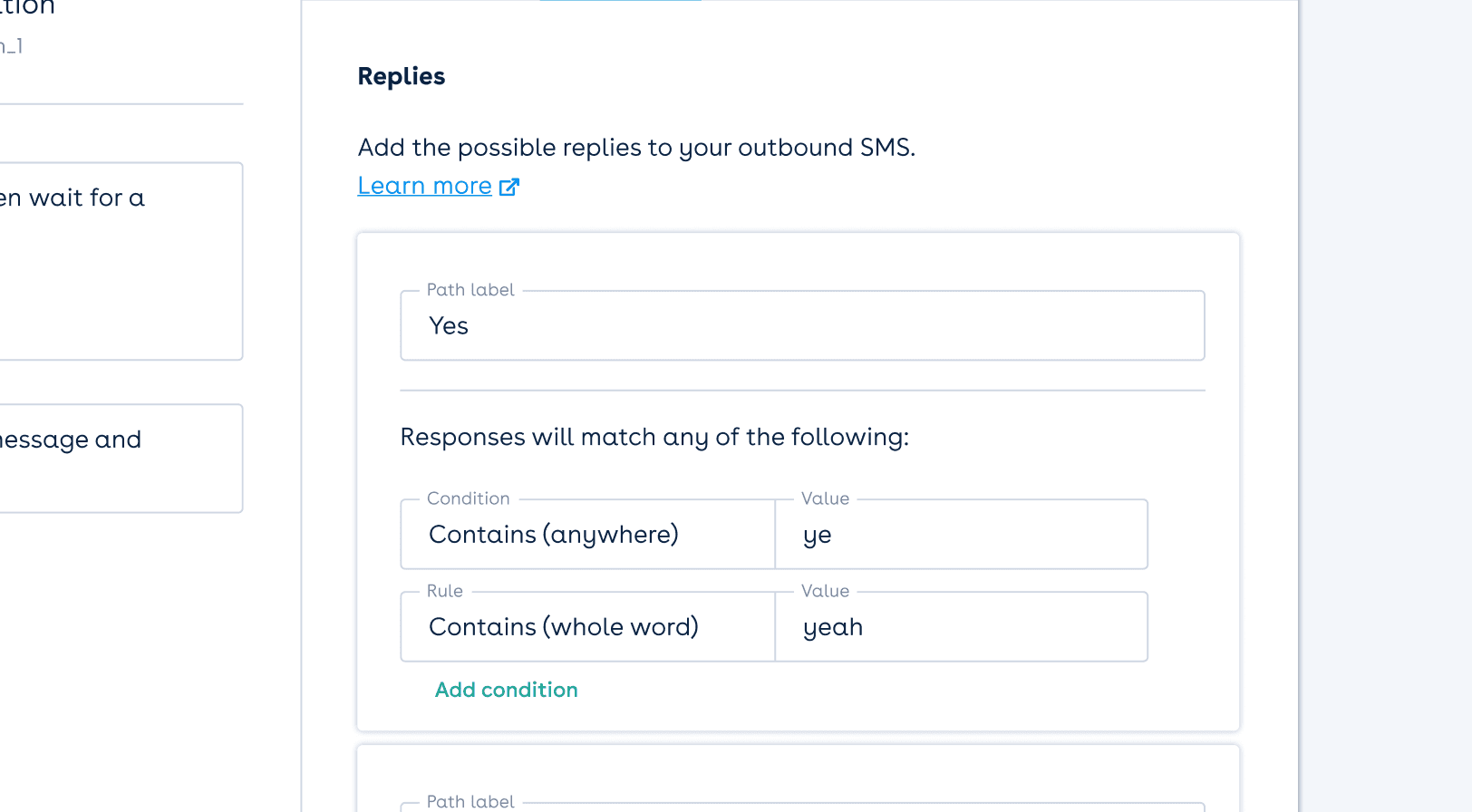
High-fidelity prototype testing with internal stakeholders shaped the MVP scope. Testing also flagged that product terminology (e.g. "pre-written regex") was confusing non-technical users. We rewrote the interface language as part of the release. From scoping through to ship, I worked with engineering to balance what the core problem needed against what was technically feasible.
deliver: the solution
A designed toolkit around how customers actually reply
Recipes: pre-written rules
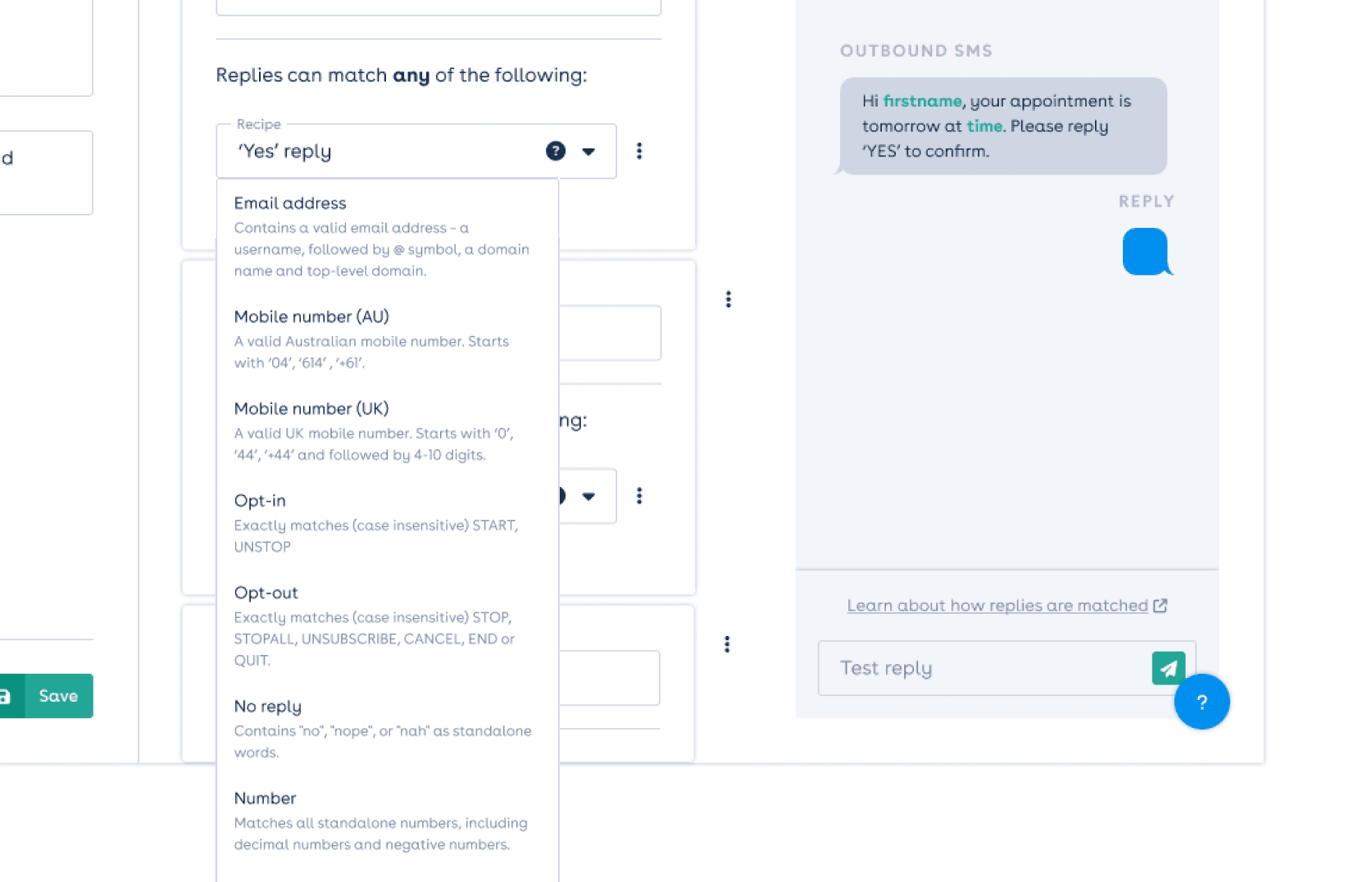
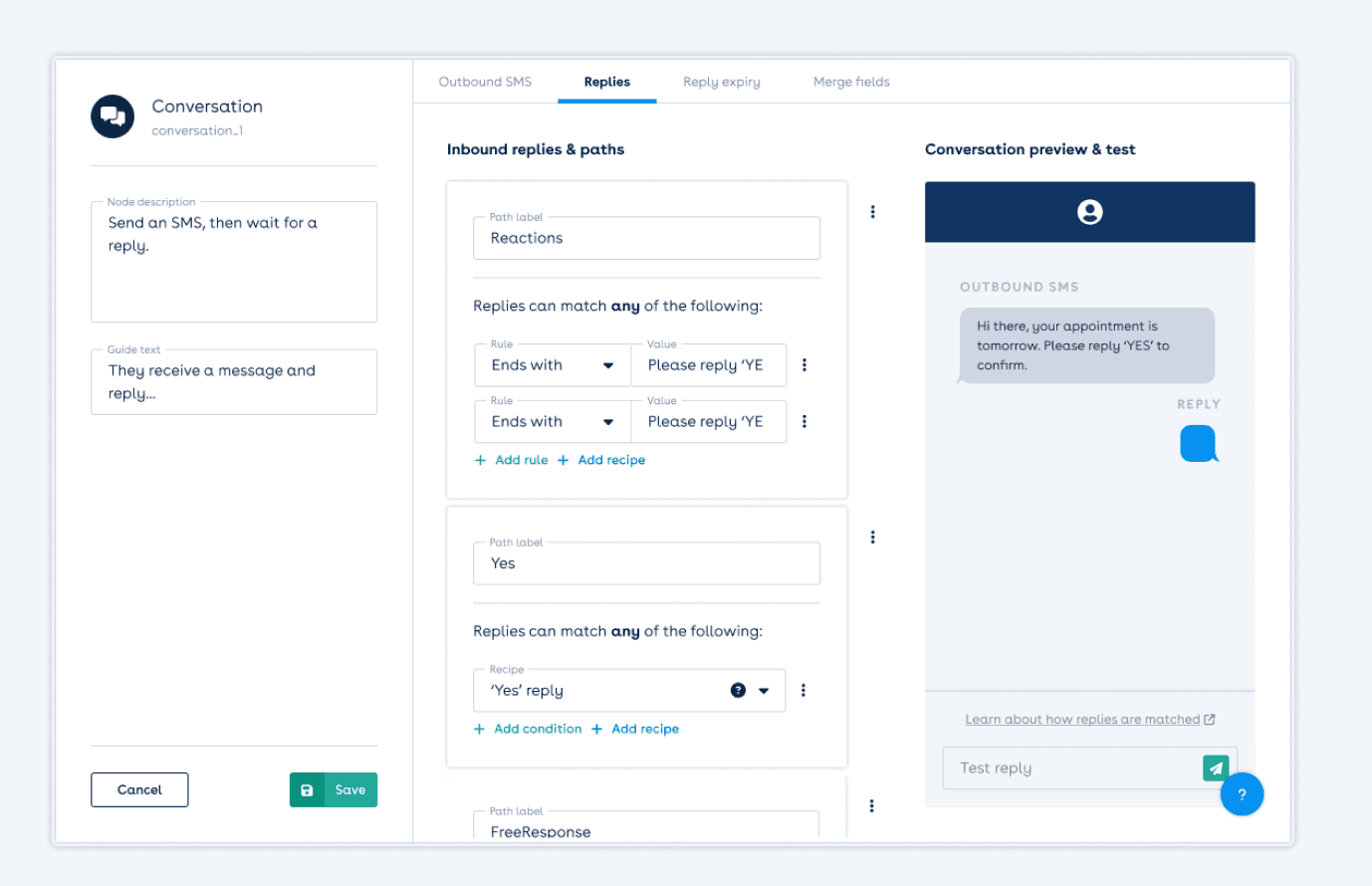
Easy reply criteria builder
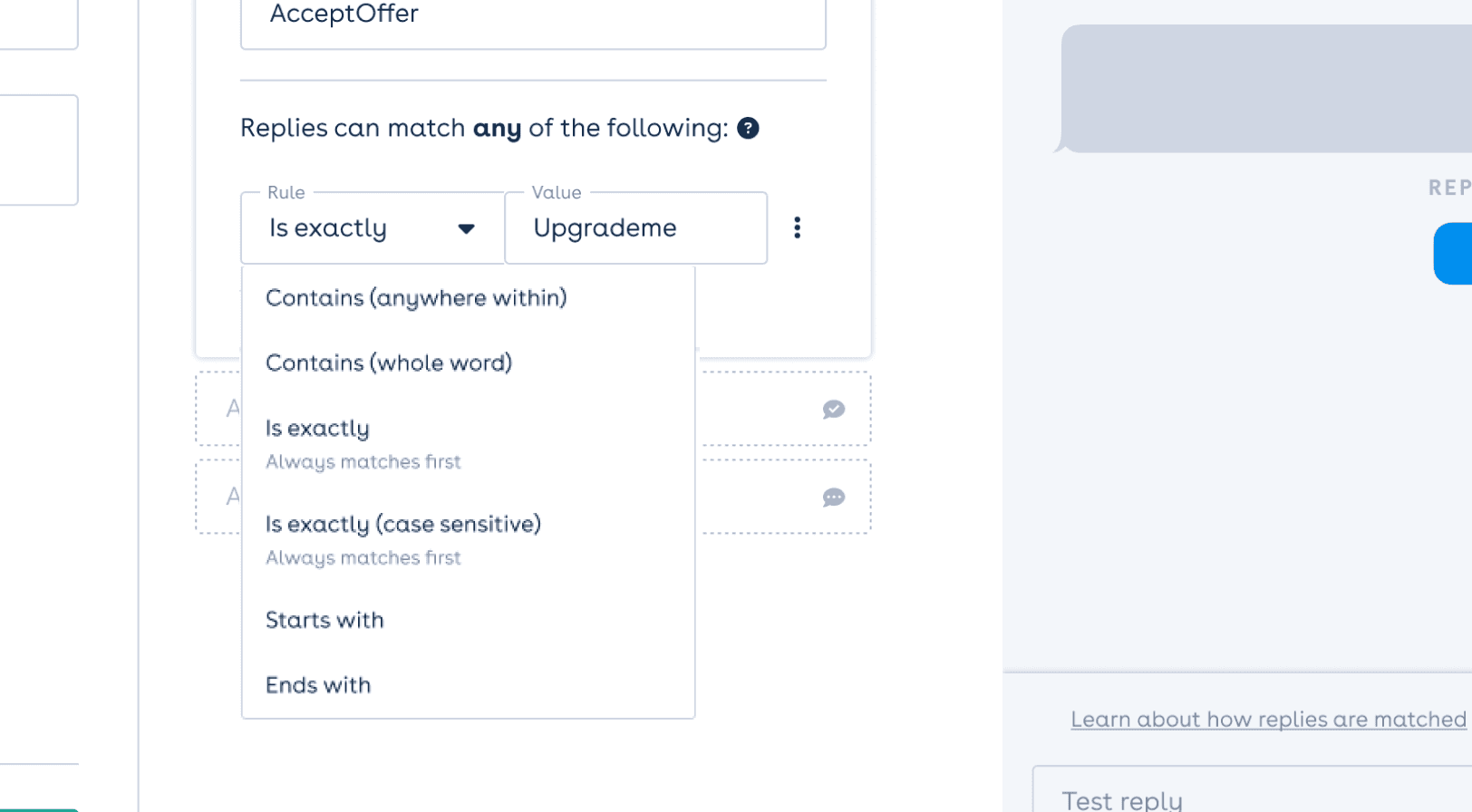
We devised a way for users to easily apply a rule – if it's matched, the recipient continues on the workflow path.
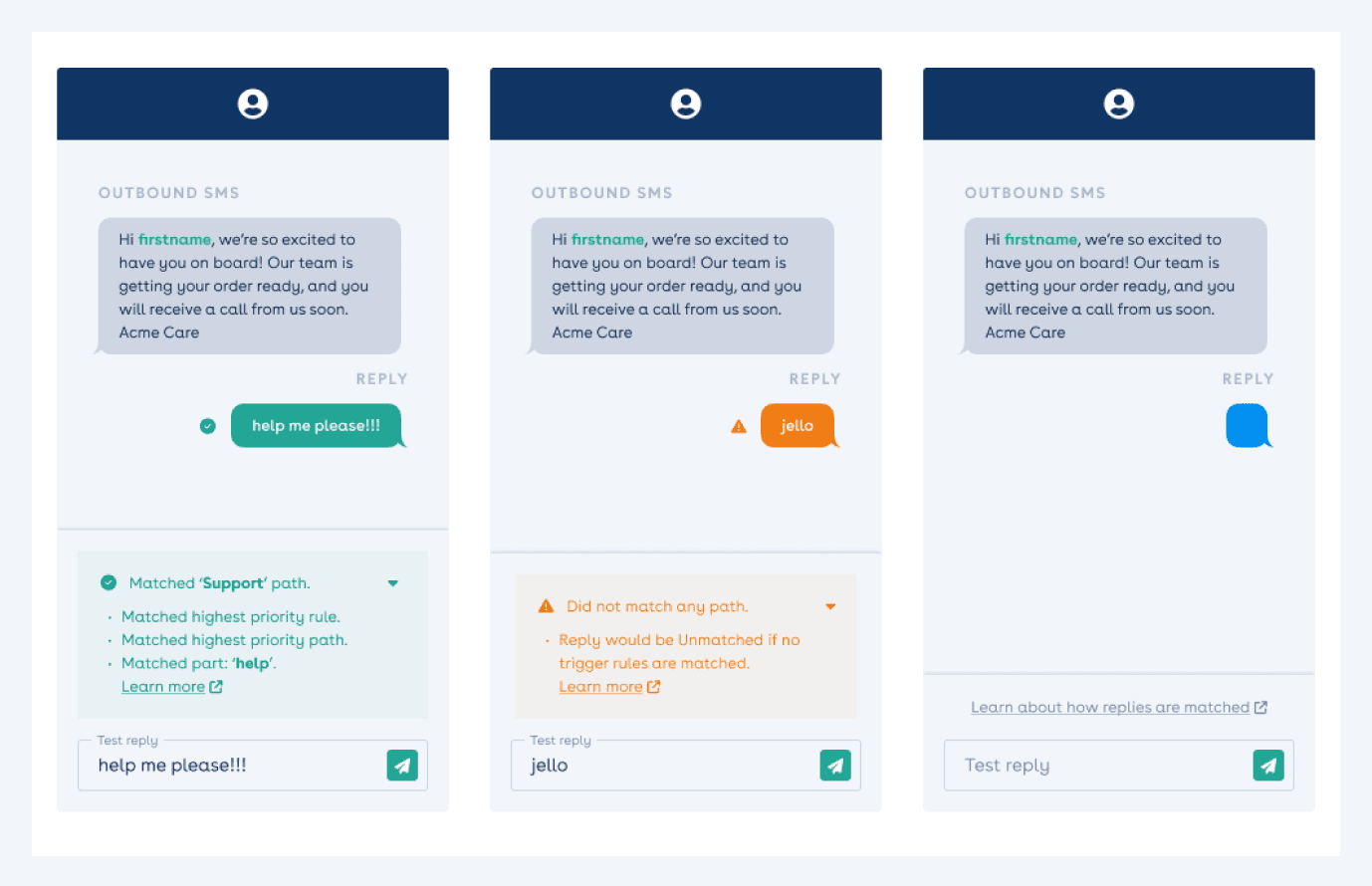
Conversation tester
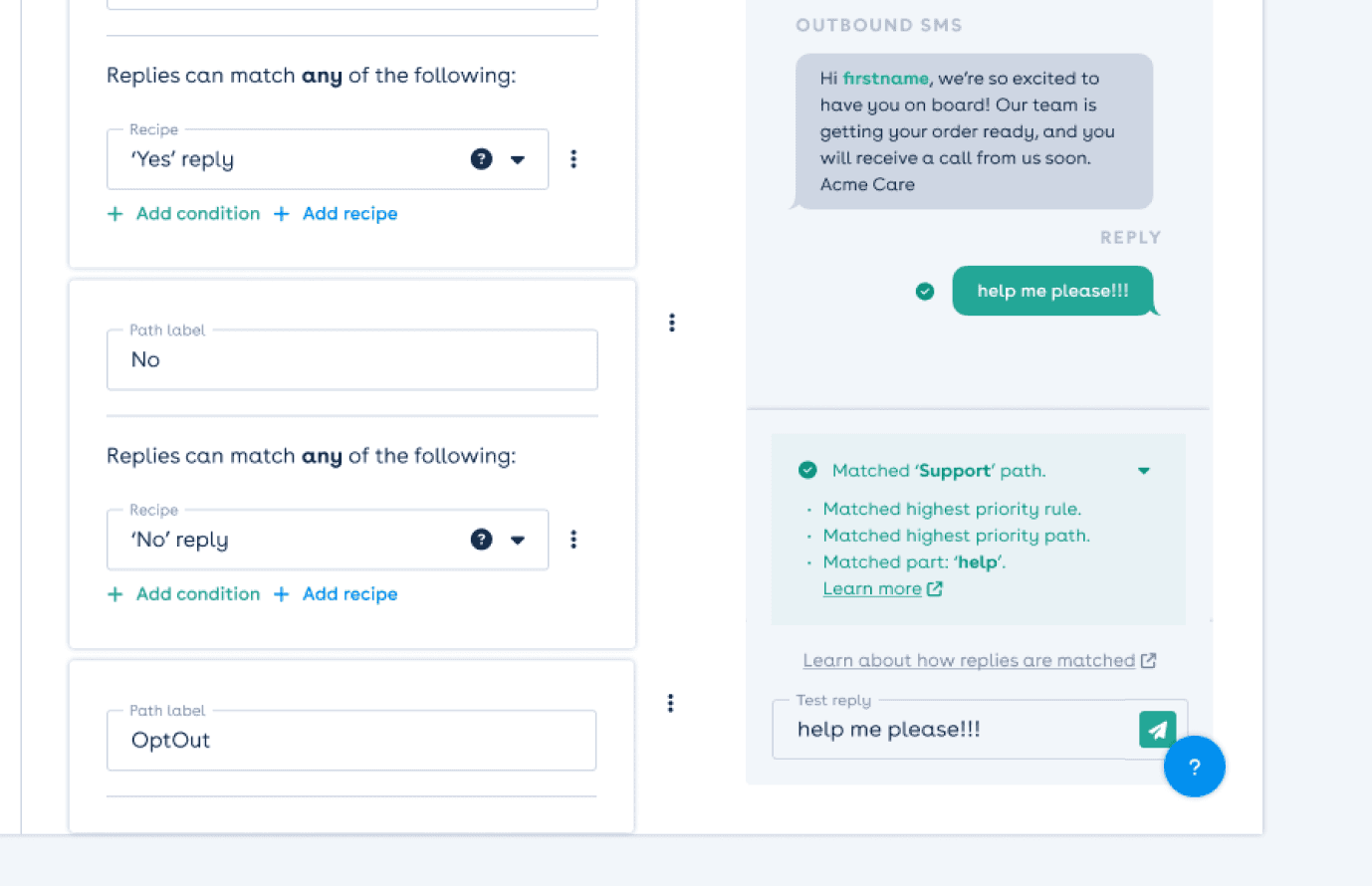
A simulation tool so users could test their rules before going live.
A fallback option when all else fails
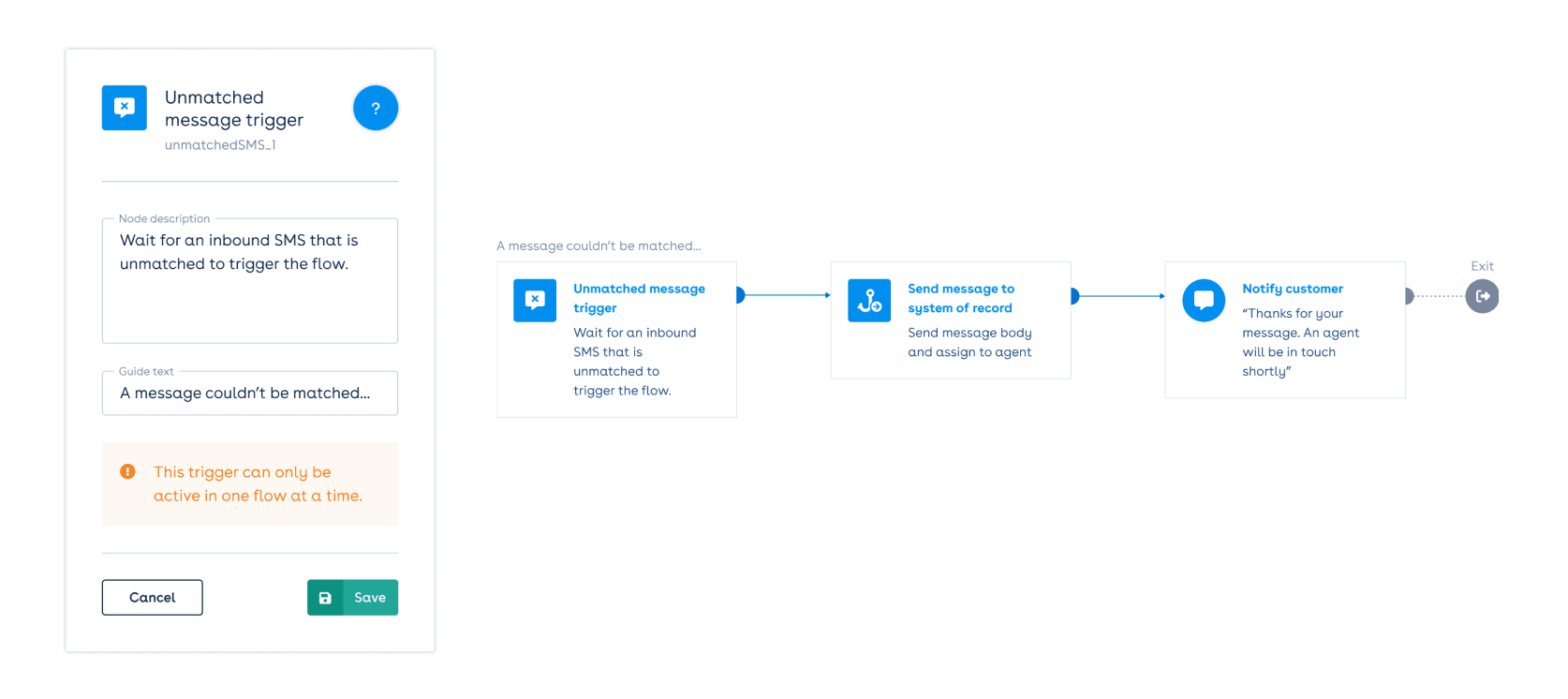
When no rule matches, a fallback workflow can be made to notify the team.
The launch
I wrote the product marketing materials and technical documentation for the release — end to end. Working across Sales, Customer Success, Engineering, and Product, I coordinated the rollout timeline and handled customer communications, translating what was a complex backend change into something customers could actually understand and use.